 The best design at the most affordable price
  info@qmwheel.com
  +86 18938656121


 English
  en
en  it
it  es
es  tr
tr  sv
sv  pt
pt  cs
cs  nl
nl  ru
ru  fr
fr  de
de  pl
pl  ar
ar 

Why Comfort Matters in Everyday Urban Riding
Daily commuting places very different demands on an electric bicycle than occasional recreational riding. Urban riders may deal with uneven pavement, frequent stops, traffic, speed bumps, rough shoulders, and changing weather during a single journey. A practical city commuter ebike therefore needs to balance stability, comfort, control, and usable electric assistance instead of focusing on one specification alone.
For everyday riders, comfort can directly affect how often an electric bicycle is used. A relaxed riding position, supportive seat, wide tires, effective suspension, accessible controls, and predictable braking can make repeated journeys easier and less tiring. QMWHEEL develops urban-oriented electric bicycles around these practical requirements, combining commuting-oriented configurations with features intended for changing city conditions.
How a City Commuter Ebike Handles Uneven Roads
Not every urban route consists of smooth asphalt. Potholes, patched pavement, gravel sections, drainage covers, speed bumps, and rough road edges can interrupt otherwise ordinary commutes. This is one reason fat tire electric bikes for urban commuting have attracted attention from riders who want greater versatility from their daily transportation.
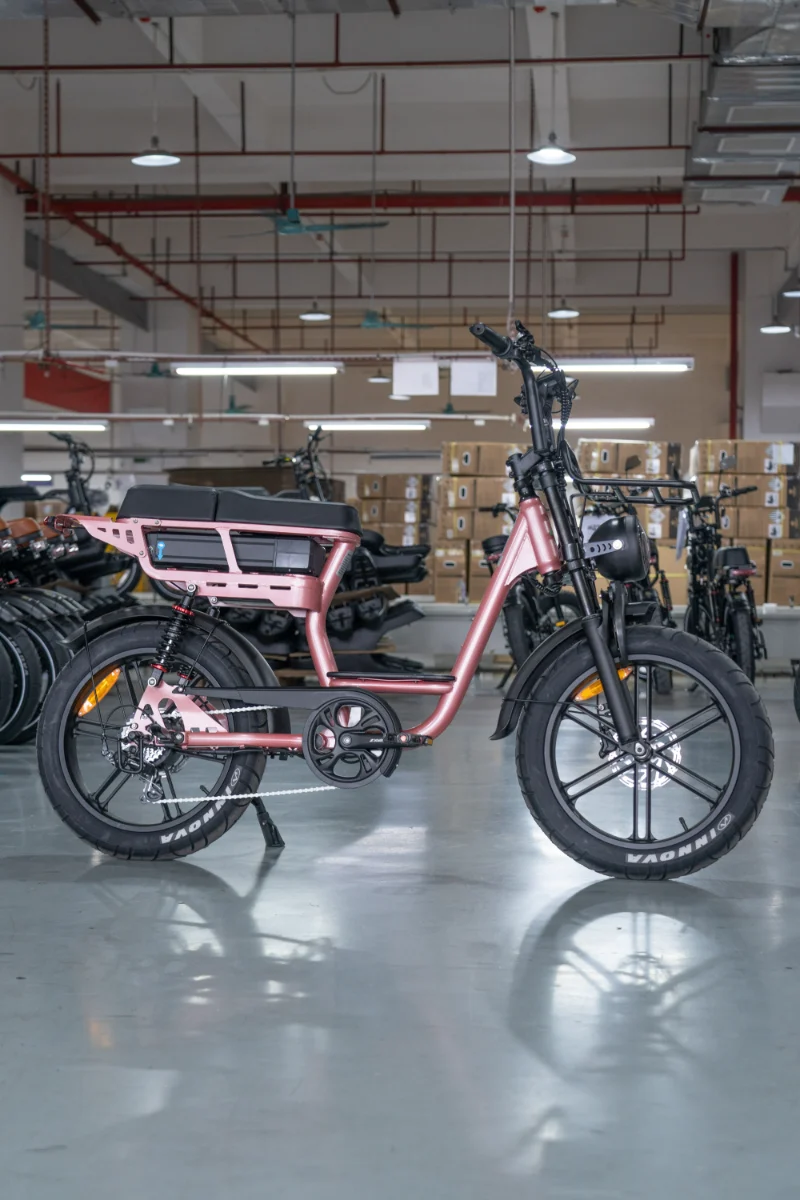
Wider tires provide a larger contact area with the riding surface and can contribute to a more planted riding feel. When combined with rear suspension, they can also improve comfort when traveling over imperfect pavement. QMWHEEL's urban-oriented range uses wide tires and suspension configurations to support commuting as well as light mixed-surface riding, giving riders greater flexibility beyond perfectly paved streets.
The benefit is not simply about making a bicycle look more substantial. Tire construction, frame geometry, suspension, wheel configuration, braking components, and rider position all influence handling. For an electric commuter bike for adults, these elements should work together so that the bicycle remains comfortable and controllable during starts, stops, turns, and changes in road surface.
Comfort Starts with the Complete Riding Position
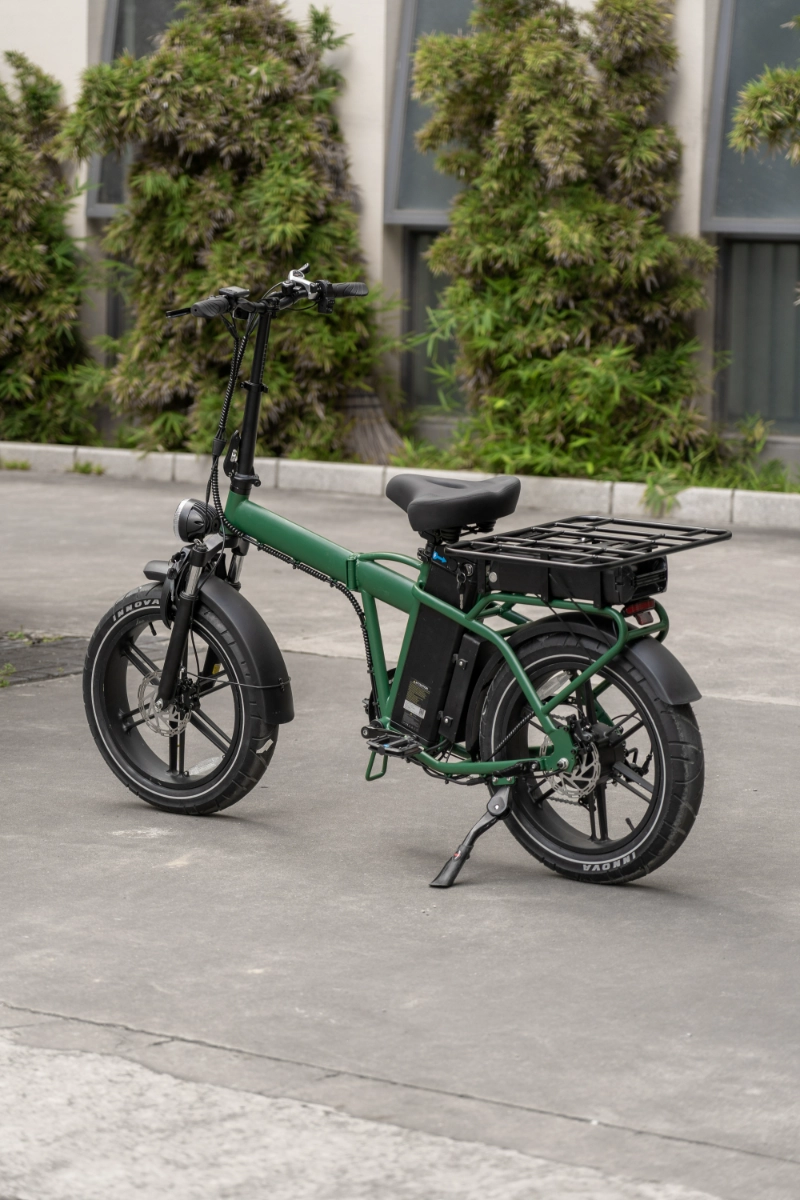
A comfortable commuter bicycle needs to accommodate the rider for more than a short test ride. Seat height, handlebar position, frame proportions, saddle design, and suspension characteristics can influence how the rider feels after repeated use. Adjustable components can also make a bicycle easier to adapt to riders with different heights and preferences.
This becomes particularly valuable for brands selling electric bicycles to broad consumer groups. A flexible riding position can help an urban electric bike appeal to more users without requiring an entirely different product architecture for every customer segment. QMWHEEL incorporates adjustable and comfort-oriented configurations into its urban electric bicycle range to support different riding preferences.
An extended or supportive saddle can further improve everyday usability when riders spend more time on the bicycle. Passenger-oriented and rear-seat configurations can also provide additional utility for transportation and carrying needs. These features expand the role of city commuter ebike beyond the basic task of traveling from home to work.
Stability Is More Than Tire Width
Stability is a combination of several engineering factors. Fat tires can provide a broader contact patch, but the frame must also provide predictable handling and appropriate weight distribution. Suspension should complement the tires rather than creating excessive movement, while braking performance needs to remain consistent when the bicycle is loaded or traveling at different speeds.
Hydraulic disc brakes are used across QMWHEEL's urban-oriented configurations and provide responsive braking control for daily riding. This is particularly relevant in city environments where riders frequently need to slow down or stop around intersections, pedestrians, vehicles, and changing traffic conditions.
| Design Element | Contribution to Urban Riding |
|---|---|
| Fat tires | Greater contact area and a stable riding feel |
| Rear suspension | Helps absorb impacts from uneven surfaces |
| Hydraulic disc brakes | Responsive control during frequent braking |
| Removable battery | More convenient charging and handling |
| Adjustable components | Better fit for different riders |
| Rear seating | Additional passenger or carrying flexibility |
Battery Flexibility for Daily Commuters
Battery capacity should be considered according to the rider's actual transportation pattern rather than treated as an isolated selling point. Daily range can be affected by rider weight, terrain, assistance level, road conditions, temperature, riding speed, and stopping frequency. A practical long range city commuter ebike should therefore provide sufficient capacity for the intended journey while remaining convenient to charge and handle.
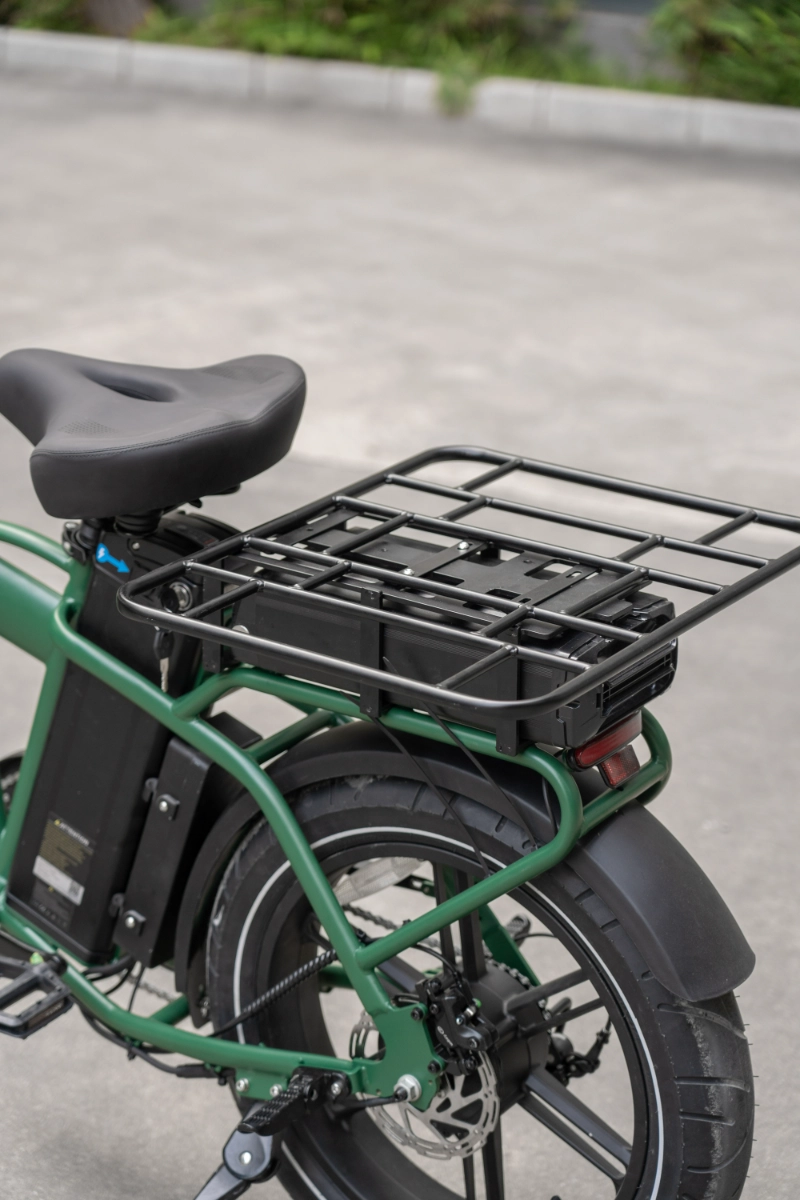
A removable battery can be especially useful for urban riders who live or work in locations where the complete bicycle cannot easily be brought indoors for charging. The battery can be removed for charging and storage, reducing one of the practical barriers associated with everyday electric mobility. QMWHEEL's urban electric bicycle configurations include removable battery designs and battery options intended for daily city transportation.
For distributors and retailers, battery flexibility can also create opportunities to position products around different commuting requirements. Some customers may prioritize compact everyday transportation, while others may value longer riding intervals or greater flexibility between charging opportunities.
Electric Assistance Should Match the Riding Environment
Motor output is important, but it should not be the only factor considered when evaluating an electric commuter bicycle. Urban riding involves repeated acceleration, inclines, stops, starts, and changes in speed. The relationship between motor assistance, battery capacity, tire selection, rider weight, and overall bicycle design can have a greater effect on practical usability than a single power figure.
QMWHEEL offers different motor configurations across its urban electric bicycle products, allowing product specifications to be matched with different riding requirements and market preferences. This flexibility is particularly relevant for international buyers because electric bicycle regulations and consumer expectations can vary by market.
A well-balanced configuration can make electric assistance feel useful without making the bicycle unnecessarily difficult to manage. For daily commuting, smooth acceleration, predictable control, practical range, and comfortable handling can be more meaningful to riders than maximum output alone.
Weather Protection for Everyday Transportation
Commuters cannot always choose ideal weather conditions. Rain, moisture, and road spray can become part of regular urban travel, making protection of electrical components an important consideration. Properly protected wiring and electrical connections can help support durability when the bicycle is exposed to moisture during everyday use.
QMWHEEL highlights waterproof protection for internal wiring on its electric bicycle products. The wiring is protected with waterproof materials to reduce exposure to rain and moisture, supporting more dependable operation across changing weather conditions.
For an all weather commuter ebike, however, riders should still consider the manufacturer's operating recommendations and local weather conditions. Electrical protection is one part of overall durability, while appropriate storage, charging practices, cleaning, and routine maintenance remain important for long-term use.
One Bicycle for Commuting and Everyday Mobility
A city commuter ebike can become more useful when it is designed around multiple everyday needs. Commuting may be the primary purpose, but riders can also use the bicycle for shopping, local errands, leisure trips, or short-distance transportation. A practical rear seat, storage area, comfortable saddle, removable battery, and stable tire configuration can increase its usefulness without turning it into a specialized utility vehicle.
QMWHEEL's urban-oriented products include features such as rear seating, suspension, wide tires, removable batteries, and adjustable components. These features support a broader range of daily applications while keeping urban mobility at the center of the product design.
This versatility is also relevant to international e-bike businesses. Retailers and distributors can position an urban commuter electric bike around several customer needs, including daily commuting, local transportation, comfortable leisure riding, and mixed urban surfaces. A broader application range can make product positioning more flexible across different markets.
What Buyers Should Look for in a City Commuter Ebike
Consumers often compare electric bicycles by motor power, battery capacity, tire size, or advertised range. These specifications are useful, but they do not provide a complete picture of riding quality. Buyers should also consider braking performance, suspension, frame design, riding position, battery accessibility, component integration, and the type of roads they regularly travel.
For distributors and retailers, the evaluation becomes even broader. Product consistency, customization capability, engineering support, certification requirements, production capacity, spare parts, packaging, and after-sales support can all influence the long-term value of a supplier relationship.
QMWHEEL operates as a B2B e-bike manufacturer with a dedicated R&D team covering frame development, powertrain, and electronic control. The company states that its products undergo durability and cycle testing and that it supports OEM/ODM cooperation for international partners.
OEM and ODM Flexibility for Global E-Bike Brands
International e-bike brands do not always want identical products. Market positioning, customer preferences, branding requirements, component choices, packaging, and regulatory considerations can vary between regions. Custom electric commuter bike manufacturing allows brands and distributors to adjust a product around their intended market rather than relying entirely on an off-the-shelf configuration.
QMWHEEL provides OEM and ODM capabilities for global distributors and fleet partners, with customization covering product design and configuration. Its manufacturing approach is intended to support businesses that need differentiated electric bicycles for international markets.
For a retailer or distributor, this flexibility can also support clearer product segmentation. A brand may require a comfort-focused commuter bicycle for one customer group and a more utility-oriented configuration for another. A supplier with engineering and manufacturing resources can help coordinate these requirements while maintaining a consistent brand identity.
Why Manufacturing Capability Matters to Global Buyers
The relationship between a product brand and an electric bicycle manufacturer extends beyond the initial purchase order. Consistent production, technical communication, quality control, component sourcing, packaging, delivery, and after-sales support all influence how efficiently a product can be brought to market and maintained over time.
QMWHEEL states that it has more than 50 R&D personnel, supports global distribution, and operates an assembly plant in Poland with localized production capabilities for European markets. The company also reports more than 120 export destinations and more than 200 certifications.
For overseas buyers, these capabilities can be particularly relevant when expanding from initial orders into repeat production. A supplier that understands both product engineering and international supply requirements can provide support across more stages of the product lifecycle.
Choosing a Commuter E-Bike Around Real Riding Needs
The best way to evaluate an electric commuter bicycle is to start with the actual riding environment. Consider road quality, average journey length, charging access, rider height, carrying requirements, weather exposure, terrain, and expected frequency of use. These factors provide a more useful basis for product selection than focusing on one specification in isolation.
For riders who regularly encounter uneven roads, fat tire city commuter e-bikes can provide a stable and comfortable riding platform. For those with limited storage or transportation space, a foldable configuration may be more practical. Riders who frequently carry passengers or additional items may benefit from rear-seat or utility-oriented designs.
This application-focused approach also helps brands communicate product value more effectively. Instead of presenting a long list of specifications, retailers can explain how the bicycle addresses specific transportation problems, from uncomfortable rough-road riding to inconvenient charging and limited carrying flexibility.
QMWHEEL Support for Urban Electric Mobility
QMWHEEL develops electric bicycles for international markets with a focus on practical riding, product engineering, and B2B cooperation. Its urban-oriented range combines comfort-focused frame configurations with features such as fat tires, suspension, hydraulic braking, removable batteries, rear seating, and adjustable components.
For global distributors, retailers, and private-label brands, this combination provides a foundation for developing products around different urban transportation requirements. OEM and ODM support further allows buyers to adapt products to their branding and market positioning while working with an established manufacturing partner.
The value of a well-designed city commuter ebike ultimately comes from how naturally it fits into everyday transportation. Comfort, stability, controllability, battery convenience, road adaptability, and practical utility all contribute to that experience. By bringing these considerations together, QMWHEEL provides electric bicycle solutions intended for riders and businesses looking for greater flexibility in urban mobility.
FAQ
What makes a city commuter ebike comfortable?
Comfort depends on several factors working together, including riding position, saddle design, tire width, suspension, frame geometry, and handlebar configuration. For regular commuting, these factors can be more important than focusing on motor output alone.
Are fat tires suitable for city commuting?
Yes. Fat tire electric bikes can be suitable for urban commuting, particularly when routes include uneven pavement, rough road edges, gravel sections, or other mixed surfaces. Their wider tires can provide a more stable riding feel.
Why is suspension useful on an electric commuter bike?
Suspension helps absorb impacts from bumps and uneven surfaces. This can reduce vibration transmitted to the rider and contribute to a more comfortable ride during repeated daily travel.
Is a removable battery useful for urban riders?
A removable battery can make charging more convenient when riders cannot bring the entire bicycle indoors. It can also simplify battery handling and storage between rides.
Can an urban electric bicycle be customized for different markets?
Yes. OEM and ODM manufacturing can allow brands and distributors to adjust appearance, branding, selected configurations, packaging, and other product requirements according to their target markets. QMWHEEL provides OEM/ODM support for international partners.
What should distributors consider when sourcing commuter e-bikes?
Distributors should evaluate product quality, engineering capability, customization options, production consistency, certification support, component availability, packaging, delivery capability, and after-sales resources in addition to unit price.
Can a city commuter ebike be used for leisure riding?
Many versatile urban-oriented electric bicycles can also support leisure riding and light mixed-surface routes. Wide tires, suspension, practical battery capacity, and comfortable riding positions can make one bicycle suitable for both commuting and recreational use.


-
 Blogs
Blogs
Custom Electric Fat Bike Solutions for Growing Global E Bike Brands
Built for global brands, a custom electric fat bike offers flexible design, battery and accessory options, rapid prototyping and OEM support for growth.
Read More -
 Blogs
Blogs
OEM Electric Motorcycle Solutions for High-Demand Urban Travel
QMWHEEL offers OEM electric motorcycle solutions with flexible customization, practical performance, and global support for brands targeting urban mobility.
Read More -
 Blogs
Blogs
We Don't Need More Orders, WE Need the Right Ones
Read More -
 Blogs
Blogs
Long Range Fat Tire Electric Bike for Extended Outdoor Adventures
Discover QMWHEEL long range fat tire electric bike solutions with durable design, and extended riding capability for outdoor adventures and daily mobility.
Read More -
 Blogs
Blogs
Why a Fat Tire Electric Bike for Women Handles Rough City Roads
QMWHEEL’s fat tire electric bike for women combines wide tires, rear suspension, hydraulic brakes, and flexible seating for confident urban commuting.
Read More -
 Blogs
Blogs
QMWHEEL Team Building | Gather Strength, Move Fast, Reach New Peaks
QMWHEEL’s beach team building activity strengthens teamwork, trust and team cohesion, inspiring employees to work together, move forward and achieve new goals.
Read More