 The best design at the most affordable price
  info@qmwheel.com
  +86 18938656121


 English
  en
en  it
it  es
es  tr
tr  sv
sv  pt
pt  cs
cs  nl
nl  ru
ru  fr
fr  de
de  pl
pl  ar
ar 

The global demand for electric mobility is no longer defined by experimentation—it is defined by operational efficiency, regulatory compliance, and total cost of ownership. Within this landscape, the commuter fat tire electric bike segment has shifted from a niche category into a mainstream solution for urban fleets, delivery operators, and commuter-focused distributors.
At QMWHEEL Vehicle, we approach this category not as a trend-driven product line, but as a system-level engineering and supply chain problem. The outcome is a product strategy built around durability, serviceability, and scalable overseas deployment, supported by strict quality control, R&D specialization, and localized assembly capability in Poland.
This article breaks down how these elements translate into real business value for B2B partners operating in global markets.
1. Why the Commuter Fat Tire Electric Bike Segment Is Growing in B2B Markets
The commuter fat tire electric bike category is expanding for three practical reasons rather than marketing narratives:
First, infrastructure conditions in many regions remain inconsistent. Cities across North America and Europe often combine well-developed roads with uneven surfaces, snow, gravel paths, or poorly maintained cycling lanes. Fat tire configurations (typically 4.0-inch and above) directly address this variability by improving traction, shock absorption, and stability.
Second, operators are under pressure to reduce vehicle downtime. Whether for last-mile delivery fleets or commuter rental systems, downtime equals direct revenue loss. Fat tire e-bikes reduce failure rates related to wheel slip, rim damage, and suspension stress.
Third, regulatory frameworks increasingly favor low-speed electric mobility. Many European cities are tightening emissions regulations while expanding cycling infrastructure. A commuter fat tire electric bike offers compliance flexibility without sacrificing operational range or load capacity.
For distributors, this translates into a stable demand curve rather than seasonal volatility.
2. Quality Control as a Commercial Risk Management System
In B2B mobility markets, quality control is not a manufacturing detail—it is a financial safeguard.
QMWHEEL Vehicle implements a full-chain inspection system that covers every stage of production, from raw material verification to final vehicle assembly. The goal is not only to eliminate defective units but to reduce long-term warranty exposure and logistics inefficiency.
Key control points include:
Incoming inspection of frame materials, battery cells, and drivetrain components
Torque calibration testing for structural fasteners
Electrical load validation under simulated riding conditions
Full system endurance testing under variable terrain profiles
For a commuter fat tire electric bike, this is especially important because stress loads are significantly higher than standard commuter bikes due to increased tire friction and heavier frame geometry.
The business implication is straightforward: fewer warranty claims, lower spare part consumption variability, and more predictable after-sales planning for distributors.
3. The Role of the Poland Assembly Base in Supply Chain Optimization
Global electric bike distribution is increasingly defined by logistics efficiency rather than production cost alone.
QMWHEEL Vehicle’s assembly operation in Poland plays a critical role in this structure. Instead of relying solely on long-distance finished-goods shipping, localized assembly enables partial SKD/CKD workflows that significantly reduce lead time for European markets.
This structure provides three operational advantages:
Reduced delivery cycles
Final assembly within Europe shortens fulfillment time, allowing distributors to respond faster to seasonal demand fluctuations.
Lower logistics cost volatility
Shipping semi-finished components instead of full units reduces container inefficiencies and tariff exposure in certain jurisdictions.
Improved customization flexibility
Local assembly allows configuration adjustments for regional compliance requirements, such as lighting systems, speed limitations, and brake standards.
For distributors handling a commuter fat tire electric bike portfolio, this means inventory risk is reduced while market responsiveness improves.
4. R&D Strategy Focused on Regional Differentiation
Homogenization is one of the core problems in the global e-bike market. Many products appear similar on paper but fail to meet region-specific expectations in real usage conditions.
QMWHEEL Vehicle addresses this through application-driven R&D rather than specification-driven design.
The engineering team focuses on three primary dimensions:
Terrain adaptation
Different regions require different torque curves, tire pressure optimization, and suspension tuning. For example, urban European environments prioritize energy efficiency and braking smoothness, while North American suburban routes require higher torque output and load stability.
Climate resilience
Cold-weather operation in northern Europe demands battery thermal management systems that differ significantly from those used in temperate zones.
Rider profile segmentation
A commuter fat tire electric bike used for daily commuting behaves differently from one used in rental fleets or delivery services. R&D outputs are adjusted accordingly.
This approach results in product families rather than single universal models, giving distributors a clearer segmentation strategy for their markets.
5. Spare Parts Ecosystem and After-Sales Infrastructure
One of the most overlooked aspects of B2B electric mobility is spare parts availability. Even a well-designed product can fail commercially if maintenance cycles are slow or fragmented.
QMWHEEL Vehicle provides a full original spare parts system covering:
Battery modules and BMS units
Controllers and wiring harnesses
Tire sets and wheel assemblies
Brake systems and drivetrain components
For a commuter fat tire electric bike, the most common wear points are tires, brake pads, and drivetrain tension systems. Ensuring rapid replacement cycles directly impacts fleet uptime.
In addition, the after-sales structure includes:
48-hour fault response mechanism for partner technical teams
Remote diagnostic support for system-level troubleshooting
Structured training programs for distributor maintenance teams
This reduces dependency on centralized repair hubs and allows partners to operate semi-autonomous service networks.
6. Global Market Deployment Strategy: North America and Europe
Market entry for electric mobility products is increasingly defined by compliance readiness and service coverage rather than product availability alone.
QMWHEEL Vehicle focuses primarily on North America and Europe due to their mature regulatory environments and high adoption rates for electric commuting solutions.
Europe
Europe is driven by regulatory alignment and infrastructure investment. Cities such as Amsterdam, Berlin, and Paris are expanding cycling-first transportation frameworks. Here, the commuter fat tire electric bike is positioned as a practical all-weather commuting solution.
The Poland assembly base plays a key role in ensuring compliance with EU technical standards and shortening delivery timelines.
North America
North America presents a different dynamic: longer commuting distances, mixed urban-suburban environments, and higher demand for ruggedized mobility solutions.
Fat tire configurations are particularly suitable for uneven road surfaces and multi-purpose usage scenarios.
For distributors, the ability to position a commuter fat tire electric bike as both a commuting tool and light utility vehicle expands addressable market segments.
7. Dealer Support Model and Commercial Enablement
In B2B mobility, product quality alone is insufficient without structured dealer support.
QMWHEEL Vehicle’s partner enablement model includes:
Pre-sales technical consultation for market positioning
Compliance documentation support for regional certifications
Spare parts forecasting assistance based on sales volume
After-sales training for repair and diagnostics
This is designed to reduce entry barriers for new distributors and improve operational efficiency for existing partners scaling their product lines.
For a commuter fat tire electric bike, where maintenance knowledge directly affects customer satisfaction, structured training becomes a critical competitive factor.
8. Long-Term Value Creation in the Commuter Fat Tire Electric Bike Segment
The future of the commuter e-bike market will not be defined by top speed or maximum range alone. It will be defined by system reliability, service infrastructure, and supply chain responsiveness.
QMWHEEL Vehicle’s approach combines:
Controlled quality assurance systems
Regionally adaptive R&D design
European localized assembly capability
Structured global after-sales support
Together, these elements form a scalable operating model for distributors who need more than a product—they need a predictable mobility platform.
As the commuter fat tire electric bike category continues to mature, the competitive advantage will increasingly shift toward suppliers capable of delivering stability at scale rather than isolated product innovation.
Conclusion
The global expansion of the commuter electric mobility sector is accelerating, but success in this market depends on execution discipline rather than product novelty.
For distributors and partners, the key decision factor is no longer whether a commuter fat tire electric bike is in demand—it is whether the supply partner can support sustained deployment, predictable maintenance cycles, and region-specific adaptation.
QMWHEEL Vehicle positions itself within this framework as a long-term operational partner, integrating engineering, production, and after-sales systems into a unified commercial structure designed for global scalability.
Label
Share:


Related News
-
 Blogs
Blogs
Shenzhen Qingmai Bicycle Co., Ltd. and Smartride Supplies B.V. Host Biweekly Tea Gathering
Read More -
 Blogs
Blogs
Why Fat Tires Matter in a Custom Electric Mountain Bike Design
Fat tire performance gives a custom electric mountain bike stronger traction, stability, and comfort for mixed terrain while supporting flexible OEM and ODM development.
Read More -
 Blogs
Blogs
Custom Electric Commuter Bike: A Practical OEM Guide for Dealers and Brands Seeking Long-Term Market Growth
The global e-bike market continues to evolve, but one trend remains clear: distributors, retailers, and emerging brands are increasingly looking for products that match local rider preferences instead of relying on generic models.
Read More -
 Blogs
Blogs
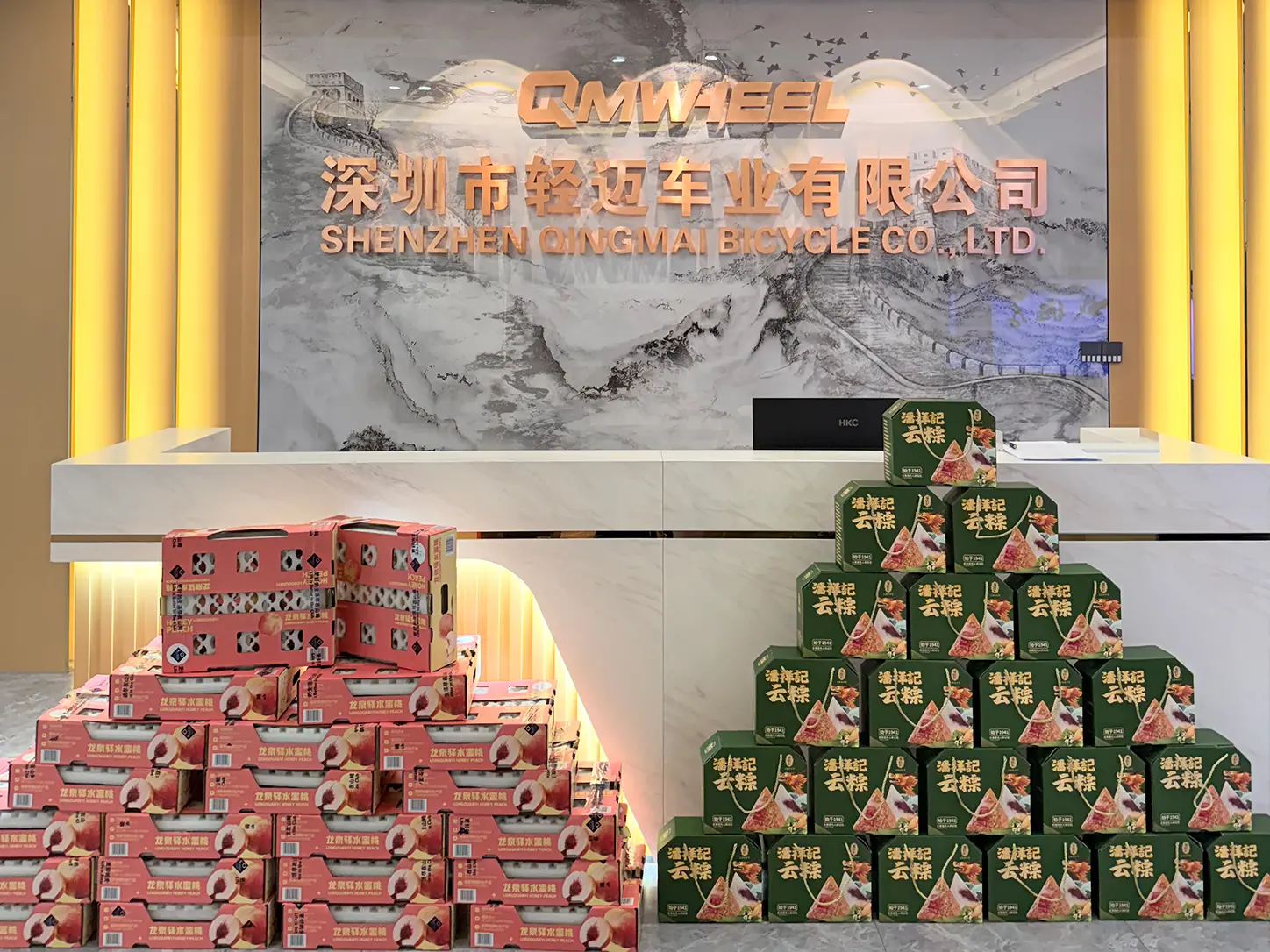
Shenzhen Qingmai Bicycle Co., Ltd. and Smartride Supplies B.V. Celebrate Dragon Boat Festival 2026
On June 17, 2026—with the Dragon Boat Festival approaching, Shenzhen Qingmai Bicycle Co., Ltd. and Smartride Supplies B.V. distributed gift boxes containing traditional zongzi (sticky rice dumplings) and fresh seasonal fruits to all employees to share the joy of the festival.
Read More -
 Blogs
Blogs
Durable Electric Bike for Adults Seeking Comfort on Long Daily Rides
Durable electric bike designs combine wide tires, suspension, strong braking, and practical battery options for comfortable, stable commuting across varied roads and longer daily rides.
Read More -
 Blogs
Blogs
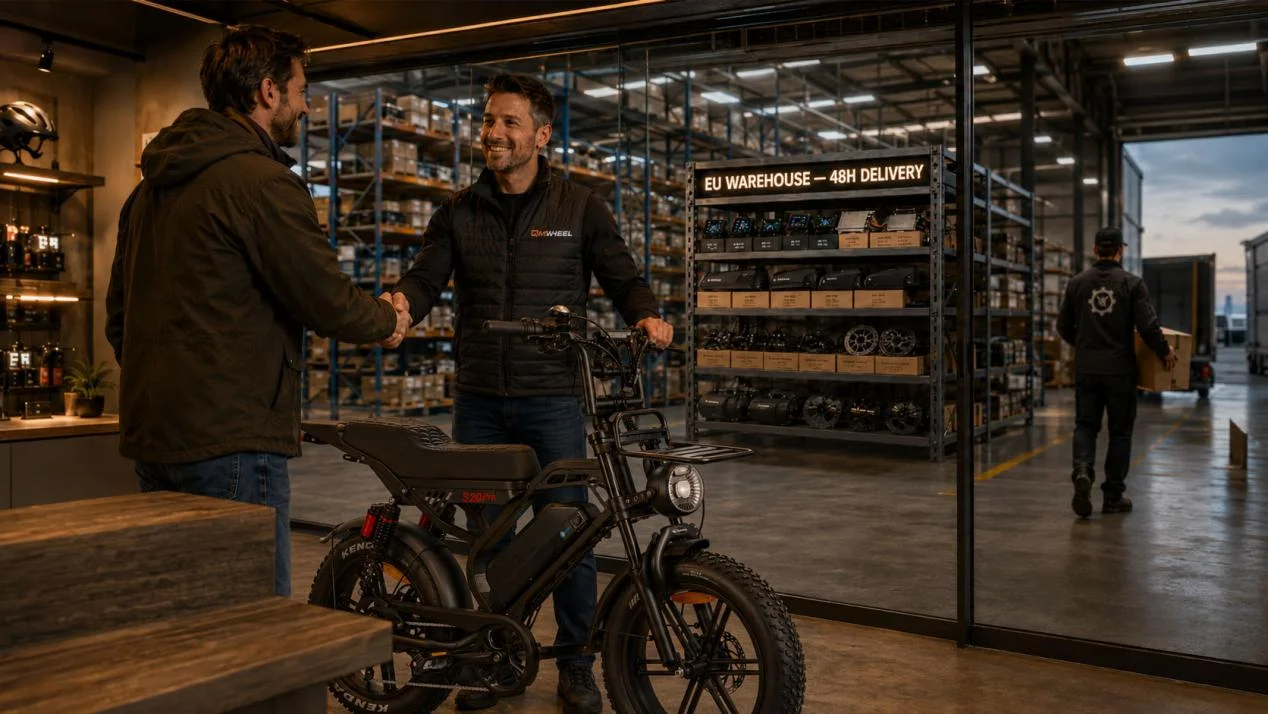
Service Isn't a Promise, It's a Shelf in Our European Warehouse
Read More