 The best design at the most affordable price
  info@qmwheel.com
  +86 18938656121


 English
  en
en  it
it  es
es  tr
tr  sv
sv  pt
pt  cs
cs  nl
nl  ru
ru  fr
fr  de
de  pl
pl  ar
ar 

Why Wide Tires Matter on Loose Riding Surfaces
Loose surfaces create a different set of demands for electric bicycles. Gravel, sand, dirt paths, wet pavement, and uneven shoulders can reduce traction and make a narrow tire feel less stable. Fat tire electric bicycles address this challenge with a wider tire footprint that maintains greater contact with the ground. Instead of concentrating weight over a small contact area, the broader tire distributes pressure more effectively, helping the bicycle remain planted when the riding surface becomes unpredictable.
For riders who move between city streets and outdoor paths, this difference can have a practical impact on confidence and control. Wide tires do not eliminate every traction problem, but they can provide a more forgiving connection with loose ground. QMWHEEL combines this tire approach with suspension, responsive braking, electric assistance, and practical battery configurations to create bicycles suited to varied riding environments.
How Fat Tire Electric Bicycles Improve Traction
The main advantage of a fat tire is its larger contact patch. When the surface contains loose gravel or soft soil, maintaining consistent tire contact becomes more important than simply having a lightweight bicycle. A wider tire can spread the load across a larger area, helping reduce the tendency to sink or lose grip suddenly. This can make steering feel more predictable when riders encounter changing ground conditions.
Tire pressure also influences how a bicycle behaves. Running a suitable pressure allows the tire to conform more effectively to small irregularities in the terrain while maintaining sufficient support. The right balance depends on rider weight, terrain, load, and riding conditions. For this reason, choosing a 20 × 4.0 inch fat tire electric bike should involve more than looking at width alone; the complete relationship between tire construction, frame geometry, suspension, braking, and motor assistance matters.

Where Wide-Tire E-Bikes Deliver the Most Value
Different loose surfaces place different demands on traction and handling. Gravel roads require stability as individual stones move beneath the tires, while sandy paths can cause narrow tires to sink more readily. Dirt trails may combine compact sections with loose soil, creating frequent changes in grip. Urban routes can also contain loose debris around construction areas, road edges, and poorly maintained sections.
| Riding Surface | Main Challenge | Benefit of Wider Tires |
|---|---|---|
| Gravel | Moving stones and vibration | Greater stability and contact |
| Sand | Soft, sinking ground | Better weight distribution |
| Dirt paths | Variable traction | More forgiving handling |
| Rough pavement | Impacts and surface changes | Added cushioning |
| Wet road edges | Reduced grip | Broader contact area |
This versatility makes a fat tire electric bike for all terrain riding useful for customers who do not want their bicycle restricted to perfectly paved roads. The goal is not to turn every electric bicycle into a dedicated off-road machine, but to give riders greater flexibility when everyday routes include imperfect surfaces.
Suspension and Braking Complete the Riding Experience
Wide tires are only one part of the handling equation. When a bicycle travels over rough ground, suspension can help control repeated impacts and reduce vibration transferred to the rider. QMWHEEL fat-tire designs incorporate suspension options intended to improve comfort across uneven roads and light trails. This becomes particularly useful on longer rides, where continuous vibration can contribute to fatigue.
Braking is equally important because loose surfaces require controlled deceleration. Hydraulic disc brakes can provide responsive stopping performance and help riders manage speed when approaching uneven sections, slopes, or changing terrain. A balanced design therefore combines tire grip, suspension response, braking control, and motor assistance rather than relying on tire width as the only performance factor.
Choosing the Right Configuration for Daily Riding
A good fat tire electric bicycle should match the way it will actually be used. Riders who mainly commute through cities may prioritize comfort, practical range, weather-resistant electrical protection, and easy battery charging. Those who frequently travel across gravel, dirt, or recreational trails may place greater emphasis on suspension, traction, frame stability, and braking performance.
Battery configuration also deserves attention. Longer rides require enough usable energy without creating unnecessary weight that affects handling. QMWHEEL offers different battery and motor configurations across its fat-tire range, giving distributors and riders greater flexibility when matching the bicycle to different markets and applications.

Why Comfort Matters on Loose Terrain
Traction is important, but comfort determines whether riders can continue enjoying longer journeys. Loose surfaces often create constant small movements rather than one large impact. Without sufficient cushioning, this vibration can become tiring over time. Wider tires can absorb part of these irregularities, while suspension and an appropriate riding position can further improve overall comfort.
For commuters, this matters even when most of the route is paved. A bicycle may encounter cracked asphalt, drainage covers, gravel shoulders, curbs, or rough access roads during a normal journey. A fat tire electric bicycle for adults can provide additional stability without limiting the bicycle to recreational use. QMWHEEL positions its fat-tire products for commuting, outdoor riding, and mixed-terrain applications, supporting this broader use case.
What Overseas Buyers Should Evaluate
For distributors, retailers, and private-label brands, selecting a fat-tire e-bike involves more than comparing motor wattage or battery capacity. Tire dimensions should match the intended market, while frame construction, braking, suspension, electrical protection, rider capacity, and configuration flexibility all influence product suitability.
OEM and ODM capability can be especially valuable when different markets require different specifications or positioning. QMWHEEL supports OEM and ODM cooperation for global distributors and fleet partners, allowing businesses to consider configurations around their target applications rather than relying exclusively on one fixed specification.
Key Buying Considerations
When evaluating fat tire electric bicycles, buyers should consider the following factors:
Tire width and construction for the expected terrain and load.
Suitable tire pressure for balancing traction, comfort, and rolling efficiency.
Suspension performance for rough roads and extended riding.
Braking capability for predictable speed control on changing surfaces.
Battery capacity according to expected distance and charging access.
Motor configuration according to terrain, rider weight, and local regulations.
Frame strength and riding geometry for stability and long-term use.
Weather-resistant electrical protection for outdoor and variable-weather riding.
OEM and ODM flexibility for distributors serving different regional markets.
A More Versatile Approach to Electric Mobility
The value of wide tires is ultimately about adaptability. Riders cannot always predict what they will encounter after leaving home, and a route that begins on smooth pavement may quickly include gravel, dirt, rough shoulders, or other loose surfaces. Fat tire electric bicycles provide a broader foundation for handling these transitions while electric assistance reduces the physical effort required over longer distances.
For QMWHEEL, the combination of wide tires, suspension, braking control, battery flexibility, and electric power supports a broader approach to everyday mobility. Instead of designing around one narrow riding environment, the focus is on giving riders and overseas buyers a practical platform that can accommodate commuting, recreation, mixed terrain, and changing road conditions.
FAQ
Are fat tire electric bicycles good on gravel?
Yes. Their wider tires create a larger contact area that can improve stability and traction on loose gravel compared with many narrow-tire designs.
Do wider tires make an electric bicycle more comfortable?
They can. Wider tires can provide additional cushioning by conforming to uneven surfaces, although overall comfort also depends on suspension, frame design, tire pressure, and riding position.
Are fat tire e-bikes suitable for city commuting?
Yes. Their stability can be useful on cracked pavement, road edges, gravel sections, and other imperfect urban surfaces. QMWHEEL designs its fat-tire range for both everyday commuting and recreational use.
What should distributors consider when sourcing fat tire e-bikes?
Distributors should evaluate tire configuration, battery options, motor choices, braking, suspension, frame construction, weather protection, load requirements, and OEM/ODM flexibility rather than focusing on a single specification.
Can fat tire electric bicycles be used beyond paved roads?
They can be suitable for appropriate gravel paths, dirt roads, light trails, and other mixed surfaces. However, riders should always select terrain according to the bicycle's intended design, local regulations, and actual riding conditions.


-
 Blogs
Blogs
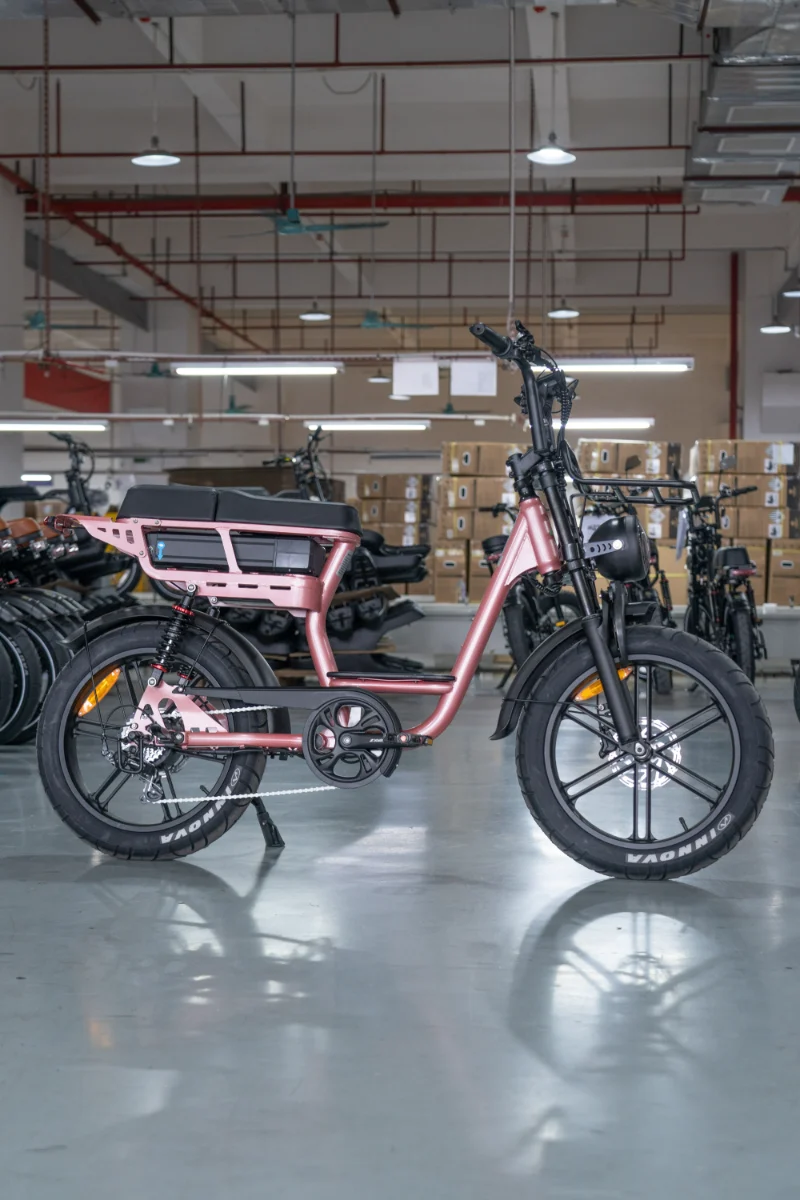
Why a Fat Tire Electric Bike for Women Handles Rough City Roads
QMWHEEL’s fat tire electric bike for women combines wide tires, rear suspension, hydraulic brakes, and flexible seating for confident urban commuting.
Read More -
 Blogs
Blogs
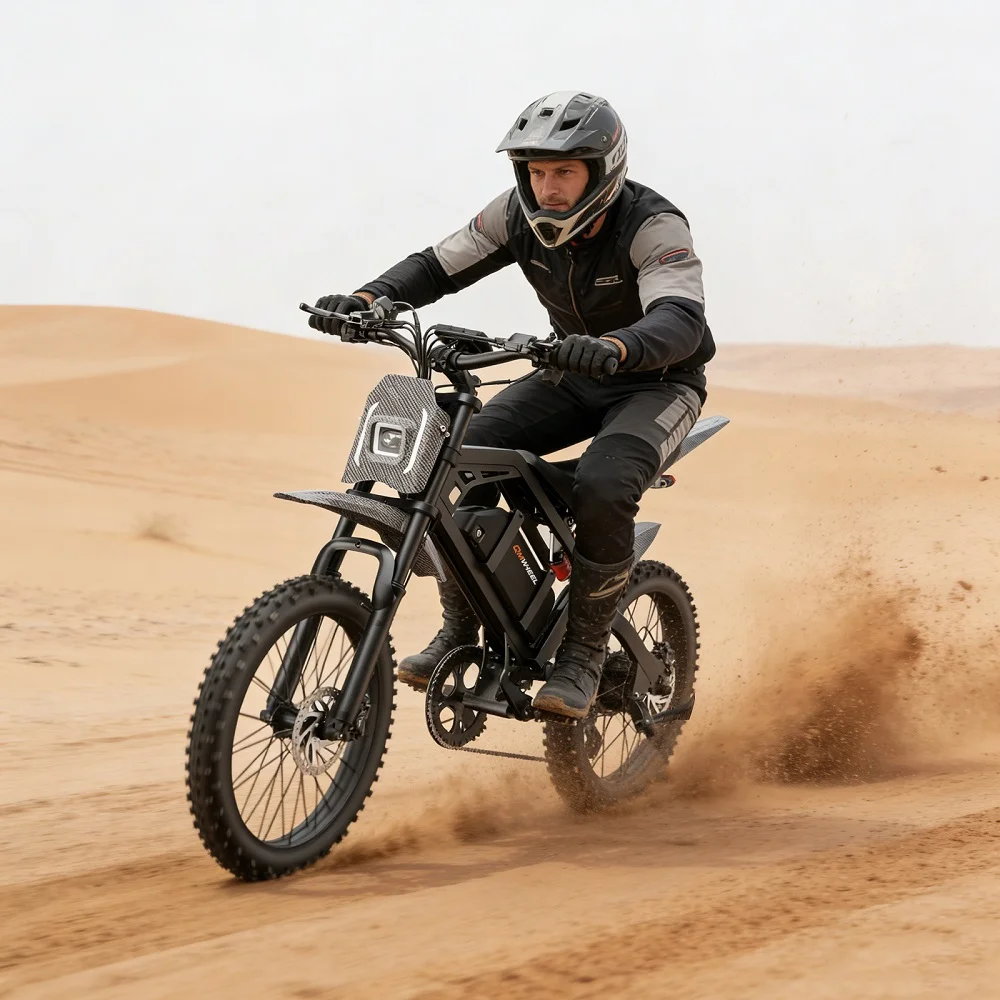
Custom Electric Fat Bike Solutions for Growing Global E Bike Brands
Built for global brands, a custom electric fat bike offers flexible design, battery and accessory options, rapid prototyping and OEM support for growth.
Read More -
 Blogs
Blogs
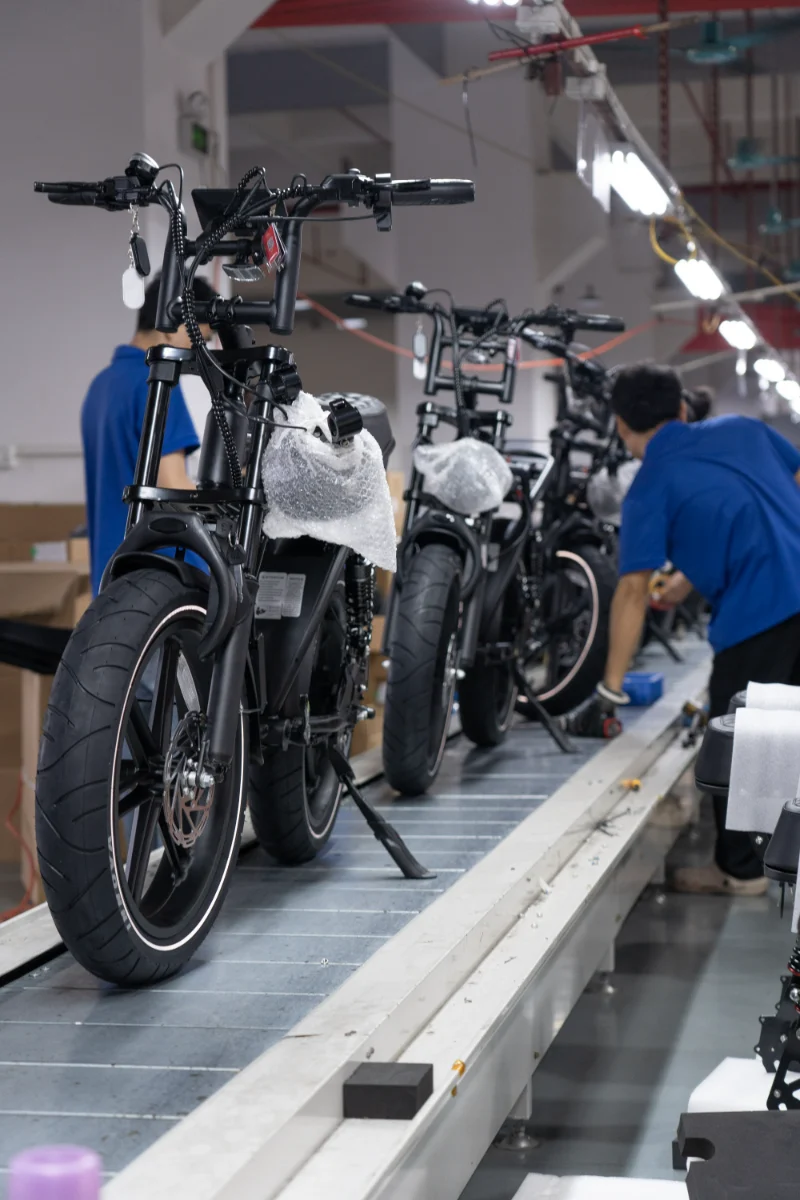
Off Road Fat Tire Bike OEM Design for Different Market Demands
QMWHEEL develops off road fat tire bike solutions with market-specific customization, OEM support, flexible components, testing, branding, and global delivery.
Read More -
 Blogs
Blogs
Custom Electric Commuter Bike: A Practical OEM Guide for Dealers and Brands Seeking Long-Term Market Growth
The global e-bike market continues to evolve, but one trend remains clear: distributors, retailers, and emerging brands are increasingly looking for products that match local rider preferences instead of relying on generic models.
Read More -
 Blogs
Blogs
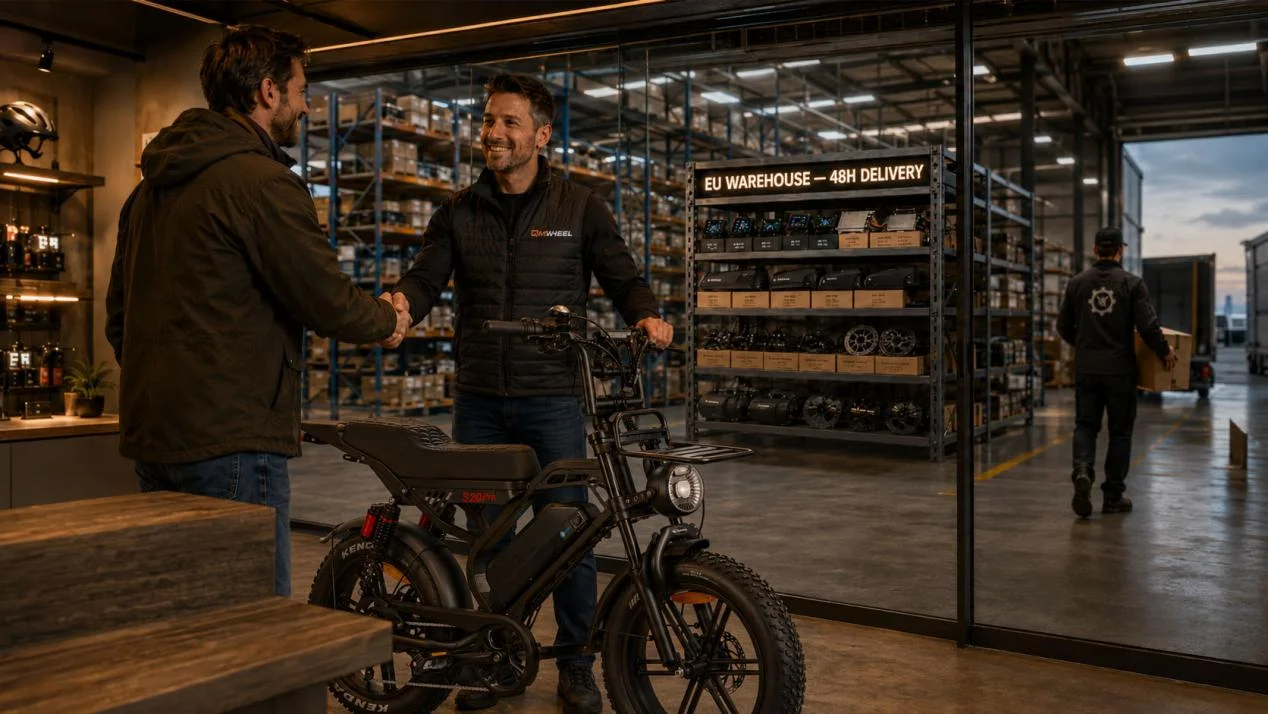
Service Isn't a Promise, It's a Shelf in Our European Warehouse
Read More -
 Blogs
Blogs
Why Fat Tires Matter in a Custom Electric Mountain Bike Design
Fat tire performance gives a custom electric mountain bike stronger traction, stability, and comfort for mixed terrain while supporting flexible OEM and ODM development.
Read More