 The best design at the most affordable price
  info@qmwheel.com
  +86 18938656121


 English
  en
en  it
it  es
es  tr
tr  sv
sv  pt
pt  cs
cs  nl
nl  ru
ru  fr
fr  de
de  pl
pl  ar
ar 

The global electric bicycle market is experiencing a significant shift as more consumers look for practical, comfortable, and reliable transportation solutions for daily commuting. Among various e-bike categories, the step through commuter e-bike for women has become an increasingly important product segment for distributors, retailers, and mobility solution providers.
Unlike traditional electric bicycles that require riders to lift their legs over a high top tube, step-through designs provide a lower entry frame structure that improves accessibility and riding comfort. This design is especially attractive for female riders, older commuters, urban users, and customers who prioritize convenience in daily transportation.
For B2B buyers, understanding the market value of step-through electric bikes is essential. Dealers are not only looking for products with attractive appearance but also require stable supply, reliable components, efficient after-sales support, and long-term business potential. A well-designed step-through commuter e-bike can help distributors expand their product portfolio and meet the growing demand for comfortable urban mobility.
QMWHEEL Vehicle focuses on providing professional B-end solutions in the fat tire e-bike industry. Through strict quality control, continuous product development, global market experience, and local assembly capabilities in Poland, the company supports international dealers and partners with competitive electric bicycle solutions designed for different market requirements.
Growing Demand for Comfortable Urban Electric Mobility Solutions
Urban transportation patterns are changing rapidly. In many countries, consumers are moving away from depending entirely on cars for short-distance travel. Rising fuel costs, crowded city roads, environmental awareness, and the need for flexible transportation have increased demand for electric bicycles.
However, different user groups have different expectations for e-bike design. Many female riders and urban commuters prefer bicycles that are easy to operate, comfortable during longer rides, and suitable for different clothing styles. This is where step-through frame technology provides a clear advantage.
A step through commuter e-bike for women addresses several practical riding challenges:
Easier mounting and dismounting compared with traditional high-frame bicycles
Better accessibility for riders wearing work clothes, skirts, or casual daily clothing
More confidence for beginners who may feel uncomfortable with traditional bicycle frames
Improved convenience for frequent stop-and-go city riding
Suitable ergonomics for various body types and riding habits
For dealers, these features create broader market opportunities. Instead of targeting only experienced cyclists, step-through electric bicycles allow retailers to reach a wider customer base, including office workers, students, leisure riders, and everyday commuters.
Why Step Through Frame Design Matters for Female Riders
Frame design is one of the most important factors influencing the riding experience of an electric bicycle. While motor power and battery capacity often receive attention, the physical interaction between the rider and the bike directly affects customer satisfaction.
Traditional bicycle frames were historically designed around performance-oriented riding positions. Although these designs can provide advantages for sports cycling, they are not always suitable for daily transportation.
A step-through frame changes this experience by lowering the central frame section. Riders can easily step over the frame instead of swinging their leg over the rear of the bicycle. This small structural change creates significant improvements in usability.
For female riders, especially those using an e-bike for commuting, shopping, neighborhood transportation, or recreational cycling, accessibility is a major purchasing factor.
A practical step through commuter e-bike for women typically combines:
Comfortable Riding Position
Urban commuters often spend extended periods on their bicycles. A comfortable upright riding posture helps reduce pressure on the wrists, shoulders, and back, making daily transportation easier.
Easy Accessibility
The low-step frame design allows riders to get on and off quickly. This is particularly useful in urban environments where frequent stops are common.
Stable Handling
Fat tire configurations provide additional stability compared with standard narrow tires. Wider tires improve contact with the road surface and help absorb small bumps, uneven pavement, and gravel paths.
Practical Daily Functions
Commuter-focused electric bicycles are usually designed with practical features such as integrated lighting systems, rear racks, fenders, comfortable saddles, and reliable braking systems. These components make the bike more suitable for real-world transportation rather than occasional recreational use.
For B2B buyers, these characteristics represent selling points that are easier for customers to understand and appreciate during the purchasing decision.
Market Opportunities for Dealers and Distributors in the Step Through E-Bike Segment
The electric bicycle market is becoming increasingly diversified. Customers are no longer only comparing motor power or battery range; they are also considering comfort, appearance, usability, and whether the product fits their lifestyle.
For bicycle dealers and distributors, this change creates new opportunities. A product portfolio that only includes traditional mountain-style electric bikes may not fully meet the needs of modern urban consumers. Adding a step through commuter e-bike for women category allows businesses to reach customers who value practicality and everyday usability.
From a sales perspective, step-through electric bikes have several advantages:
1. Wider Customer Coverage
The step-through structure reduces barriers for new riders. Many consumers who hesitate to purchase traditional electric bikes because of frame height or riding difficulty may feel more comfortable choosing a low-step model.
This expands the potential customer base to include:
Female urban commuters
First-time e-bike buyers
Older riders looking for easier operation
Casual cyclists
Consumers using e-bikes for daily errands
Riders who prioritize comfort over extreme performance
For retailers, this means a larger addressable market and more opportunities to create repeat customer relationships.
2. Strong Demand in European and North American Markets
In many European cities, bicycles are already an important part of daily transportation. Infrastructure improvements, environmental policies, and increasing urban congestion continue to support electric bicycle adoption.
North American markets are also showing growing interest in comfortable commuter-focused e-bikes. Many customers are looking for alternatives to short-distance car trips, especially for commuting, shopping, and recreational activities.
The popularity of fat tire electric bicycles further strengthens this segment because wider tires provide versatility across different road conditions. Riders can use these bikes on city streets, bike paths, suburban roads, and light outdoor terrain.
For international distributors, combining step-through accessibility with fat tire performance creates a product category with strong commercial potential.
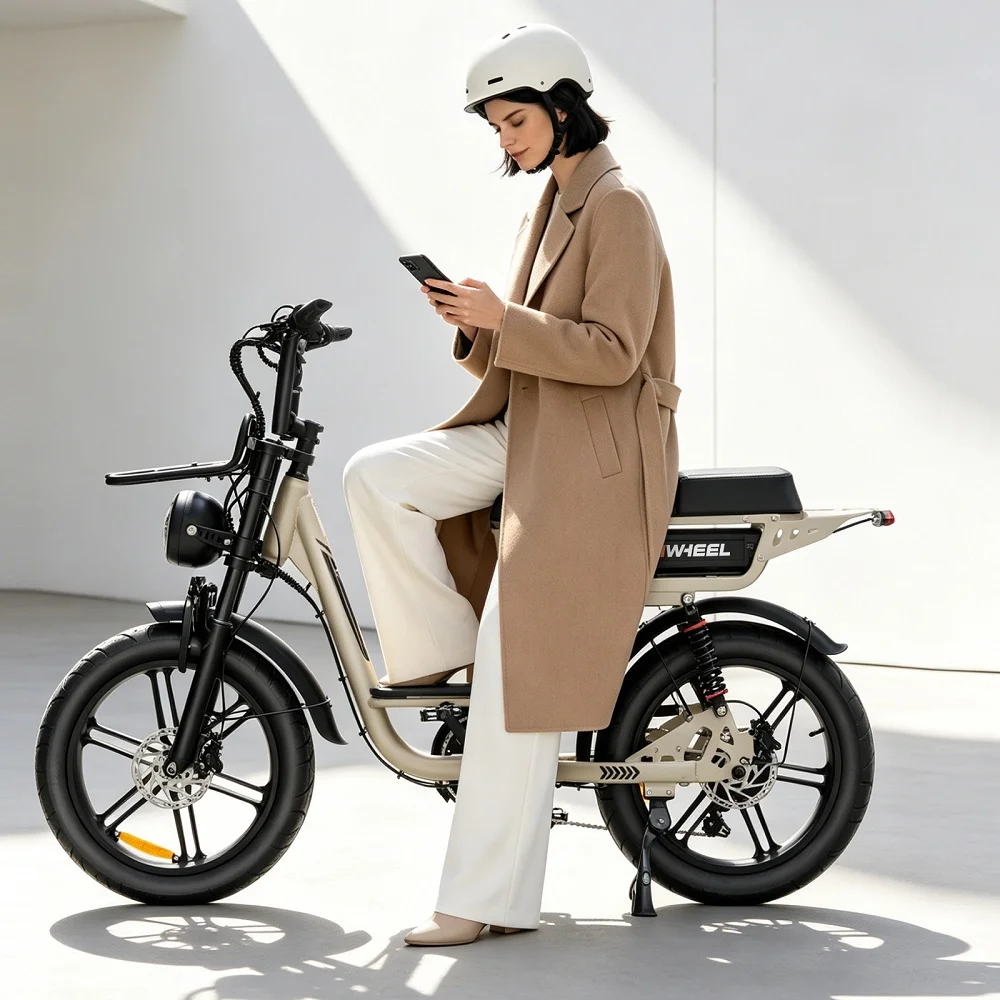
Key Product Features B2B Buyers Should Evaluate
When selecting an electric bicycle supplier, professional buyers need to evaluate more than product appearance. Long-term market performance depends on engineering quality, component reliability, production consistency, and supplier support.
For a step through commuter e-bike for women, important evaluation factors include the following:
Frame Structure and Durability
The frame is the foundation of an electric bicycle. A well-designed step-through frame needs to balance accessibility with structural strength.
Because the top tube is lowered or removed, engineers must carefully optimize the frame geometry to maintain stability and durability. High-quality frame design ensures that riders can enjoy comfortable access without sacrificing riding safety.
For dealers, frame quality directly affects customer satisfaction and warranty rates. A reliable structure helps reduce after-sales problems and protects the reputation of local sales channels.
Motor Performance and Riding Experience
The motor system determines acceleration, climbing ability, and overall riding comfort.
For commuter applications, customers typically prefer smooth and predictable power delivery rather than aggressive acceleration. A well-tuned motor system allows riders to control speed easily in city environments.
Important motor considerations include:
Stable power output
Efficient energy consumption
Low operating noise
Reliable performance under different road conditions
Compatibility with local regulations
For B2B partners, consistent motor quality is critical because electric drive systems are one of the main components affecting customer satisfaction.
Battery System Reliability
Battery performance directly influences the usability of electric bicycles. A commuter e-bike must provide enough range for daily transportation while maintaining safety and reliability.
Professional suppliers focus on battery quality control, including:
Battery cell selection
Protection system design
Charging safety
Temperature management
Long-term cycle performance
A reliable battery system reduces maintenance requirements and improves the ownership experience for end users.
For distributors, battery reliability also reduces potential service issues and helps build stronger customer trust.
Fat Tire Advantages for Daily Commuting
Fat tire electric bikes were initially popular among outdoor cycling enthusiasts, but their advantages have made them increasingly suitable for urban commuting.
The wider tires provide:
Better Stability
The larger contact area improves balance, especially for riders who are new to electric bicycles.
Improved Comfort
Fat tires can absorb vibration from uneven surfaces, including rough pavement, gravel roads, and urban infrastructure imperfections.
Multi-Scenario Usage
A fat tire step-through electric bike can support different riding environments, including:
City commuting
Weekend leisure riding
Park trails
Residential areas
Light outdoor routes
This versatility increases the product value from a consumer perspective and gives dealers more flexibility in market positioning.
How QMWHEEL Supports Global E-Bike Partners
For B2B buyers, selecting the right electric bicycle supplier is not only about choosing a product. It is about establishing a reliable business relationship that supports long-term market growth.
QMWHEEL Vehicle focuses on serving global partners through a combination of product development, quality management, supply capability, and after-sales support.
The company has developed a comprehensive approach to support dealers in different regions.
Full-Chain Quality Control
Quality consistency is one of the most important requirements for international electric bicycle businesses.
QMWHEEL applies quality control throughout the product process, including:
Raw material inspection
Core component evaluation
Assembly process management
Finished vehicle testing
Performance verification before delivery
This systematic approach helps ensure that products delivered to partners meet expected quality standards and provide stable performance in different markets.
For distributors, reliable quality means fewer customer complaints, lower maintenance pressure, and stronger market reputation.
Local Assembly Capability in Poland
Global logistics and supply chain efficiency have become increasingly important in the electric bicycle industry.
QMWHEEL utilizes its local assembly plant in Poland to strengthen its European market presence. Local assembly capability helps improve supply flexibility, support regional market requirements, and provide closer service for European partners.
For dealers operating in competitive markets, supply chain responsiveness can be an important advantage.
A supplier with international market understanding and regional support capability can help partners respond faster to changing customer demand.
After-Sales Support and Spare Parts Supply: Important Factors for Long-Term B2B Cooperation
In the electric bicycle industry, selling the product is only the beginning of the customer relationship. For dealers and distributors, long-term profitability depends heavily on after-sales efficiency, spare parts availability, and supplier responsiveness.
A high-quality step through commuter e-bike for women should not only deliver a good riding experience when new but also maintain reliable performance throughout its service life.
Many challenges faced by e-bike retailers are not caused by the initial product sale but by difficulties after delivery, such as:
Limited availability of replacement components
Long waiting times for technical support
Inconsistent product quality between batches
Difficult warranty handling
Lack of technical documentation
These issues can increase operational costs for distributors and negatively affect customer satisfaction.
QMWHEEL places strong attention on after-sales support by providing comprehensive spare parts supply and partner-oriented service solutions. By maintaining access to original components, dealers can handle routine maintenance and replacement requirements more efficiently.
This approach helps partners:
Reduce after-sales service pressure
Improve customer retention
Shorten repair cycles
Maintain consistent product performance
Build stronger local market credibility
For B2B customers, supplier support capability is often as important as product specifications.
Product Positioning Strategies for Different Markets
One reason step-through electric bicycles have strong commercial potential is their flexibility in market positioning. Different regions and customer groups may have different purchasing motivations, and distributors can adjust their marketing strategies accordingly.
Urban Commuting Market
In metropolitan areas, transportation efficiency is a major customer concern. Many commuters need a reliable solution for short and medium-distance travel.
A step through commuter e-bike for women fits this market because it combines:
Easy operation
Comfortable riding posture
Practical daily features
Lower physical requirements
Efficient transportation performance
Dealers can position these products as alternatives to short car trips or public transportation connections.
Lifestyle and Leisure Market
Not every customer purchases an electric bicycle purely for commuting. Many users want a product that supports weekend activities, neighborhood exploration, and recreational riding.
Fat tire designs are attractive in this segment because they provide a more stable and comfortable riding experience on different surfaces.
Retailers can highlight:
Comfortable riding experience
Modern appearance
Versatile usage scenarios
Easy handling for beginners
Mature Rider Market
Accessibility is a key consideration for many mature riders. A step-through frame allows easier mounting and dismounting, making riding more convenient.
For this customer group, comfort, stability, and reliability are usually more important than extreme speed or aggressive performance.
This creates another valuable market opportunity for dealers.
The Importance of Supplier Experience in International E-Bike Business
The electric bicycle industry involves multiple technical areas, including mechanical engineering, electrical systems, battery technology, supply chain management, and international logistics.
For overseas buyers, working with an experienced supplier reduces business risks.
A professional supplier should understand:
Regional regulations
Customer preferences in different markets
Component compatibility requirements
Packaging and transportation challenges
Maintenance expectations
QMWHEEL has focused on the fat tire e-bike sector for many years, developing experience in product design, quality management, and international partner cooperation.
Rather than providing only individual products, the company focuses on supporting dealers with complete business solutions, including product supply, spare parts support, and market-oriented cooperation.
This B2B approach helps partners develop sustainable electric bicycle businesses in competitive markets.
Choosing the Right Step Through Electric Bike Supplier
For distributors considering adding electric bicycles to their product portfolio, supplier selection should involve a detailed evaluation process.
Important questions include:
Does the supplier have stable production capability?
Consistent supply is essential for maintaining inventory and meeting market demand. Suppliers should have organized production systems and quality management procedures.
Can the supplier provide reliable components?
Electric bicycles contain multiple critical components, including motors, batteries, controllers, braking systems, and electronic accessories. Component reliability directly affects product performance.
Does the supplier support long-term cooperation?
Successful B2B relationships require more than product transactions. Technical communication, spare parts support, and flexible cooperation models are important for market development.
Does the supplier understand international markets?
Export markets have different requirements regarding product configuration, regulations, customer preferences, and service expectations.
A supplier with global experience can help dealers reduce market entry challenges.
Future Development Trends of Step Through Commuter E-Bikes
The electric bicycle industry continues to evolve as consumers demand more intelligent, comfortable, and practical mobility solutions.
Several trends are expected to influence the future development of step-through commuter electric bikes.
Increasing Focus on User-Friendly Design
Modern consumers expect products that fit naturally into their daily lives. Ease of use, comfort, and accessibility will continue to influence purchasing decisions.
The popularity of step-through designs reflects a broader industry movement toward more inclusive mobility products.
Manufacturers and suppliers that understand different rider needs will have stronger advantages in global competition.
Integration of Smart Technology
Electric bicycles are becoming more connected through technologies such as:
Battery management systems
Intelligent controllers
Digital displays
Mobile applications
Anti-theft solutions
These technologies improve user experience and create additional value for customers.
For dealers, products with practical smart features can help differentiate their offerings in competitive markets.
Demand for Sustainable Transportation
Environmental awareness continues to influence consumer choices. Electric bicycles provide an efficient solution for short-distance transportation while reducing dependence on traditional fuel-powered vehicles.
Governments, businesses, and individuals are increasingly considering sustainable mobility options, supporting long-term market growth for electric bicycles.
Expansion of International Distribution Networks
As e-bike adoption grows globally, opportunities for distributors, retailers, and regional partners continue to expand.
However, success in international markets requires reliable suppliers that can provide:
Consistent product quality
Flexible supply capability
Technical support
Spare parts availability
Market cooperation support
Companies that build strong supply chain partnerships will be better positioned to capture future opportunities.
Conclusion: Building Long-Term Value with Step Through Commuter E-Bikes
The step through commuter e-bike for women represents more than a specific bicycle design. It reflects the changing expectations of modern consumers who want transportation products that are comfortable, practical, reliable, and easy to use.
For global dealers and distributors, this category offers strong market potential because it serves a wide range of customers, from urban commuters to recreational riders and those seeking accessible mobility solutions.
However, successful e-bike business development depends on choosing the right supplier. Product quality, engineering capability, after-sales support, spare parts availability, and supply chain reliability all influence long-term commercial success.
QMWHEEL Vehicle combines product development capabilities, strict quality management, international market experience, and local assembly advantages in Poland to support global partners in expanding their electric bicycle businesses.
By providing reliable fat tire electric bicycle solutions and comprehensive partner support, QMWHEEL helps dealers meet evolving customer demands and build sustainable growth in the global e-bike market.


-
 Blogs
Blogs
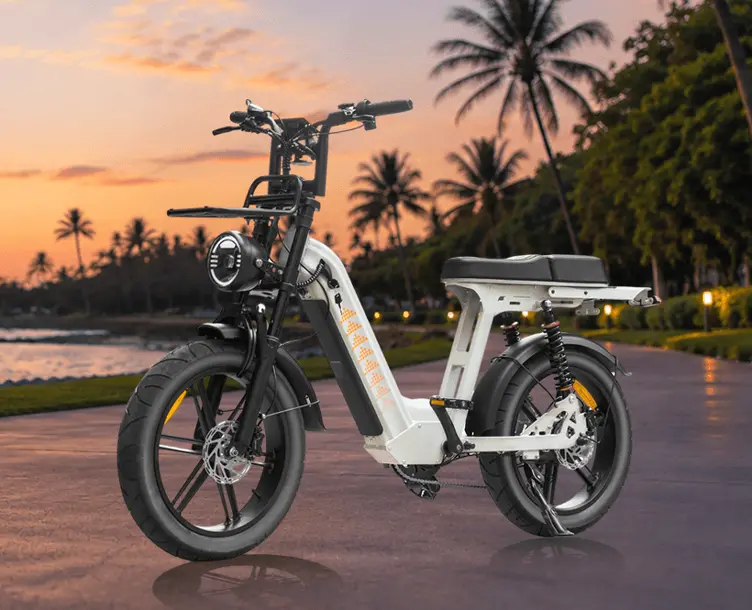
City Commuter Ebike with Long Range Battery for Everyday Travel
QMWHEEL’s city commuter ebike combines long-range battery capacity, fat tires and rear suspension for comfortable daily travel, errands and weekend riding.
Read More -
 Blogs
Blogs
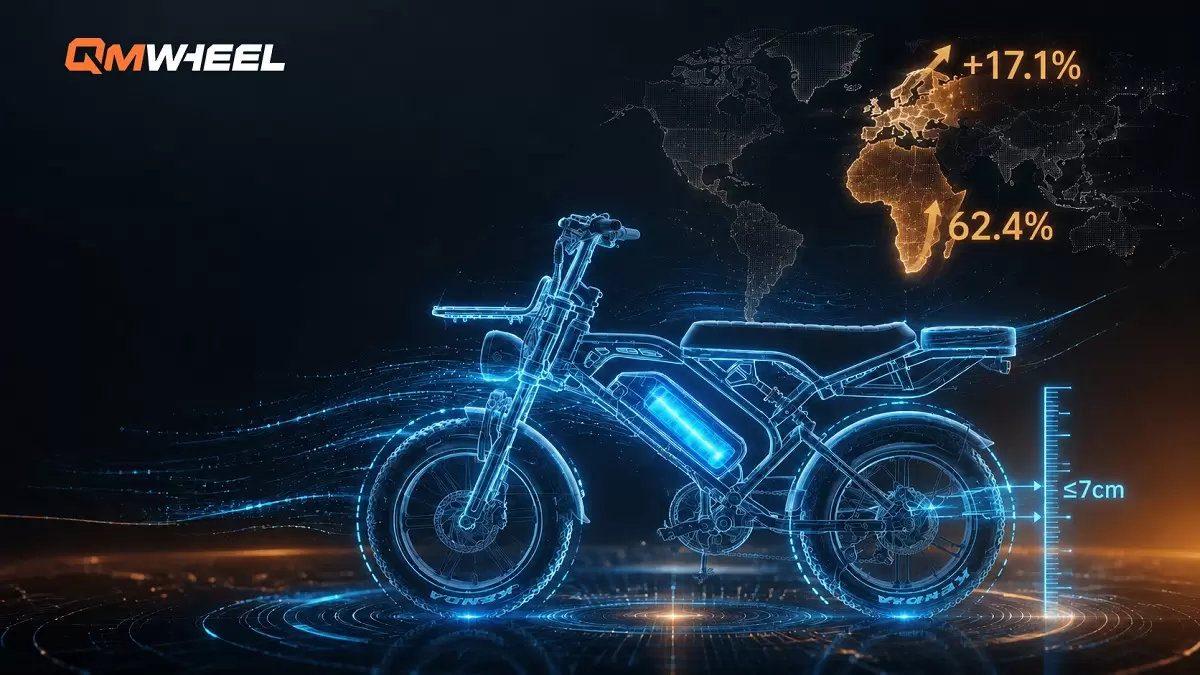
Global E-Bike Export Boom: Qingmai Adapts Products to Meet Dutch Local Tire Rules
What Are 2026’s Biggest E-Bike Trends? Qingmai Shares Compliance & Export Insights
Read More -
 Blogs
Blogs
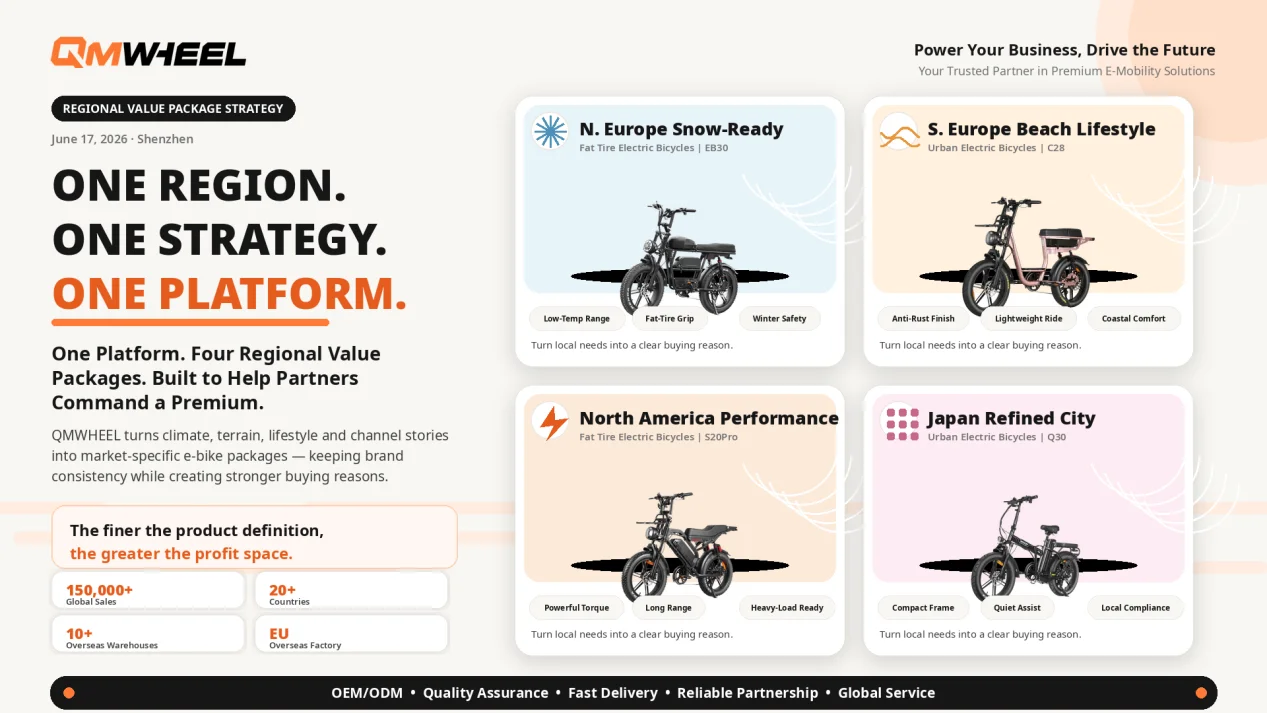
One Platform, Market by Market
Read More -
 Blogs
Blogs
We Don't Need More Orders, WE Need the Right Ones
Read More -
 Blogs
Blogs
QMWHEEL Team Building | Gather Strength, Move Fast, Reach New Peaks
QMWHEEL’s beach team building activity strengthens teamwork, trust and team cohesion, inspiring employees to work together, move forward and achieve new goals.
Read More -
 Blogs
Blogs
Custom Electric Commuter Bike: A Practical OEM Guide for Dealers and Brands Seeking Long-Term Market Growth
The global e-bike market continues to evolve, but one trend remains clear: distributors, retailers, and emerging brands are increasingly looking for products that match local rider preferences instead of relying on generic models.
Read More